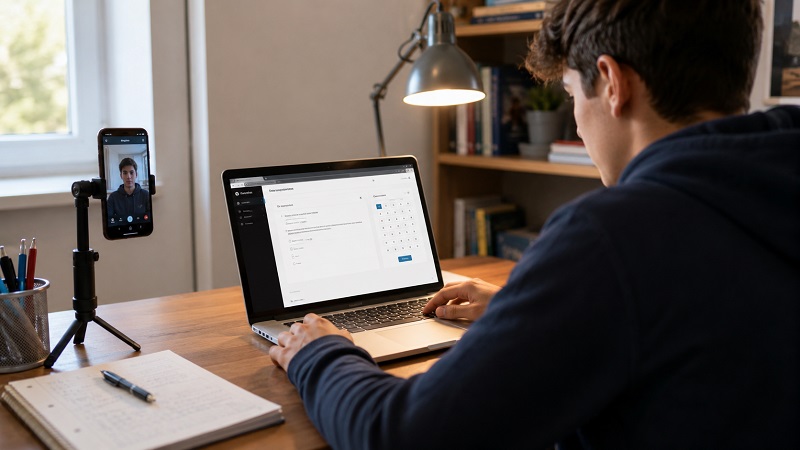
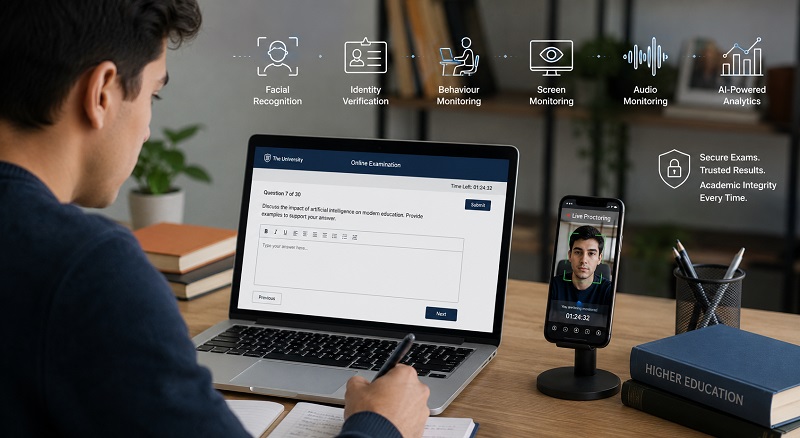
As South African universities continue to adapt to the evolving landscape of digital education, the demand for reliable and secure remote exam software has reached an all-time high. The shift to blended and online learning has highlighted the need for robust online proctoring solutions that ensure fairness, scalability, and academic integrity.
Institutions are now prioritising software that can offer a seamless, low-data, and student-friendly experience while maintaining strict compliance with examination standards. In this article, we evaluate the essential features, benefits, and considerations when selecting the best remote exam software in 2025, with a focus on the unique needs of the South African higher education system.
Why Remote Exam Software Is Crucial for 2025
The digital transformation of higher education is no longer a vision of the future, it is the present reality. Universities across South Africa are now offering fully remote and hybrid learning programmes, which require equally adaptable assessment tools.
Remote exam software offers:
- Greater accessibility for students across provinces
- Cost-effective administration of large-scale exams
- Secure platforms that prevent cheating or proxy test-taking
- Flexibility in academic calendar planning
These tools not only streamline assessment logistics but also open new opportunities for student engagement and institutional growth.
What to Look for in Remote Exam Software
Choosing the right solution depends on the scale, student demographic, and type of assessment. However, all South African universities should prioritise the following features in their selection:
- Online Proctoring Capabilities
Including webcam monitoring, screen sharing, and AI behaviour analysis. - Facial Recognition and Identity Verification
To ensure the correct student is taking the exam, crucial for institutions with distance learning students. - Low-Data and Mobile Friendly Design
Especially important for students accessing exams via entry-level smartphones in areas with limited connectivity. - GPS Location Verification
Adds another layer of security by confirming that the exam is taken in an approved location. - Offline Functionality
To allow assessments to continue even during intermittent internet issues. - Plagiarism Detection
Essential for assignment-based and open-book assessments. - Secure Data Encryption and Storage
To protect student submissions and comply with local data privacy laws. - Customisable Exam Modes
Including open book, timed tests, and controlled browser features.
Spotlight: The Invigilator App
One of the top-performing platforms in South Africa, The Invigilator App is designed with local challenges in mind. It offers a low-data, mobile-first experience that is widely accessible to South African students.
Key features include:
- Facial recognition for identity verification
- Audio and video monitoring for online proctoring
- Location tracking with GPS
- Plagiarism detection in assignments
- Instant messaging between students and faculty during exams
- Offline support for areas with unstable internet access
Its simplicity and compatibility with basic devices make it an ideal solution for South African universities aiming to modernise their assessment practices without alienating students from rural or under-resourced backgrounds.
Benefits of Using Remote Exam Software in South Africa
1. Promotes Academic Integrity
Automated proctoring tools monitor behaviour patterns and flag any suspicious activity. This reduces cheating and maintains the credibility of qualifications.
2. Improves Student Access
Students no longer need to travel to urban centres or campus venues to complete their exams. This promotes educational inclusion across all nine provinces.
3. Streamlines Administration
University staff can set up, run, and evaluate exams without the administrative burden of physical venues and invigilators.
4. Supports Scalable Programmes
The software can handle hundreds or thousands of students simultaneously, making it ideal for national-level assessments or large academic departments.
Comparing Paid and Free Options
While some platforms offer free or open-source versions, commercial remote exam software offers:
- Advanced proctoring features
- Regular updates and compliance with privacy laws
- Support services and integration with learning management systems
- Data analytics for academic performance and risk detection
Universities looking to buy exam platforms should evaluate vendors based on support, security, and long-term scalability rather than price alone.
Questions to Ask Before You Buy an Exam Platform
- Is it compliant with POPIA and international data protection standards?
- Can it run effectively on mobile phones and low-bandwidth connections?
- Does it integrate with our LMS or student information system?
- What support is available for staff and students?
- Is there a trial or pilot version we can test?
Preparing Faculty and Students
Adopting new technology requires effective change management. Universities should invest in:
- Onboarding guides and live demonstrations
- Student training sessions
- FAQ support portals
- IT helplines during exam periods
- Feedback loops after pilot tests
This ensures better adoption and fewer disruptions during critical assessments.
Future-Proofing Your Assessment Strategy
With continued uncertainty around infrastructure, student mobility, and technology trends, investing in robust remote exam software is a strategic decision. By selecting a scalable, secure, and inclusive platform, universities position themselves as forward-thinking institutions ready to meet the demands of 2025 and beyond.
South African universities must act now to stay competitive and credible in the rapidly evolving education sector. Whether you run a fully online programme or need flexible solutions for emergencies and distance learning, secure remote exam platforms like The Invigilator App provide the foundation for scalable and trusted digital assessments.
Contact The Invigilator team today to explore a solution tailored to your institution’s unique needs.
Visit the Contact Page to request a demo or proposal.
FAQs & Answers
1. What is remote exam software?
It is a digital platform used to deliver and manage exams online, often with proctoring and security features.
2. Why do South African universities need online proctoring?
It helps maintain academic integrity in remote learning environments and prevents cheating.
3. What makes The Invigilator App suitable for SA students?
It works on entry-level smartphones, is low on data usage, and supports offline functionality.
4. Can students use mobile phones for remote exams?
Yes, the best platforms are mobile-friendly and designed for devices most students already have.
5. How is cheating prevented in remote exams?
Through AI monitoring, facial recognition, screen recording, and location tracking.
6. Is it safe to submit exam answers digitally?
Yes, with encrypted data transfer and secure storage, submissions remain protected.
7. Can remote exam tools detect plagiarism?
Yes, many include plagiarism detection tools for assignment-based submissions.
8. What support is provided for universities using these tools?
Most platforms offer live support, user guides, and integration assistance for staff and students.