As the educational landscape in South Africa shifts towards digital learning, ensuring fairness in online assessments has never been more vital. Institutions are increasingly adopting online learning models to improve accessibility and continuity in education, particularly in response to challenges such as geographic limitations and unexpected disruptions. However, this transition also raises concerns about academic honesty and secure assessment environments. This is where artificial intelligence driven proctoring solutions come in, redefining how we conduct secure digital exams with greater transparency and integrity.
In this article, we explore the growing relevance of AI proctoring technology in South African education and how it is ensuring online test fairness across various learning environments. We will examine its application, effectiveness, and why institutions are moving towards secure digital exams to protect their academic credibility.
The Importance of Online Test Fairness in South Africa
Education in South Africa is increasingly embracing hybrid and remote learning methodologies. While this digital shift improves accessibility, it introduces a new set of challenges around fairness and credibility in testing.
Online test fairness SA is not just about detecting cheating, it also means creating an equitable environment where all learners are assessed under the same conditions. From urban university students with access to stable internet connections to rural learners with minimal infrastructure, ensuring a level playing field is essential for preserving trust in qualifications.
Fair assessments influence future career opportunities, admission into further studies, and the overall quality of the education system. Without mechanisms to ensure fairness, institutions risk graduating students with inflated grades or compromised credentials.
How AI Proctoring Works to Secure Digital Exams
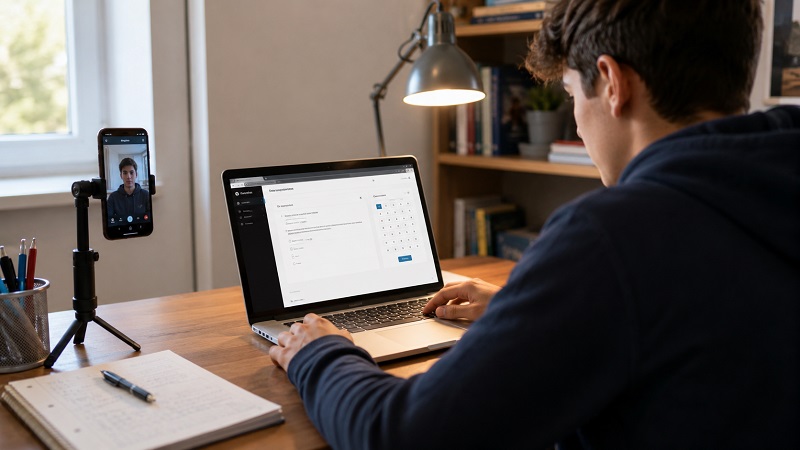
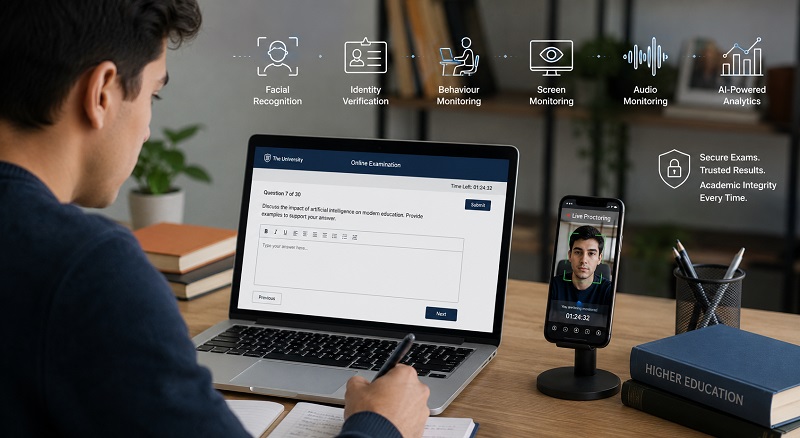
Artificial intelligence has transformed how we monitor and evaluate student performance in remote assessments. AI proctoring systems use machine learning algorithms, facial recognition, eye tracking, and behavioural analytics to oversee assessments remotely.
These systems are designed to detect anomalies such as:
- Switching tabs or windows
- Speaking or whispering during the exam
- The presence of unauthorised individuals in the room
- Attempts to access external devices or notes
When such behaviour is flagged, the data is reviewed by exam administrators, ensuring a balance between automation and human judgement.
By using AI proctoring, institutions reduce their dependence on human invigilators and gain the ability to monitor exams at scale, with increased efficiency and reduced bias.
Building Trust Through Secure Digital Exams
Secure digital exams serve as a cornerstone for academic integrity. The process begins with verifying the identity of the student. Advanced AI tools can use facial recognition and multi-factor authentication to ensure that the student registered for the course is the one taking the test.
In addition, the exam environment is monitored via webcam and microphone, allowing the system to identify and flag any suspicious activity. These security layers give educators confidence in the authenticity of the results, especially for high-stakes examinations.
Encryption of exam data further ensures that the integrity of submissions is protected. Secure data transmission and storage prevent tampering or leaks, which is crucial in maintaining institutional credibility.
Accessibility and Inclusivity in Proctoring Technology
One of the common concerns about implementing AI proctoring is accessibility. Can all students use the software regardless of their devices or internet strength?
Platforms like The Invigilator App have been developed with inclusivity in mind. Designed for low-data environments and compatible with entry-level smartphones and laptops, these tools are ideal for the diverse South African education sector. The Invigilator App ensures that students across varying socio-economic backgrounds have access to secure assessments without technical barriers.
Inclusive design allows every learner to be evaluated under fair conditions, regardless of geographical or economic challenges.
AI Proctoring in Action: Real Use Cases
Universities and colleges across South Africa have already begun integrating AI proctoring solutions into their academic frameworks.
Use Case Examples:
- University remote exams: Institutions use AI proctoring to conduct semester-end examinations for students across provinces without the need for physical invigilation.
- Online short courses: Professional certification providers use AI tools to validate knowledge acquisition and skill testing in remote environments.
- Postgraduate assessments: Research-based programmes use secure digital exams to conduct oral evaluations with layered video monitoring and plagiarism detection.
These real-world examples reflect the growing trust in AI proctoring to maintain test fairness and integrity without compromising student accessibility.
Overcoming Student Anxiety Around Proctoring
Some students may express concern about being constantly watched or judged by a machine. Transparency plays a key role in addressing these anxieties.
Educational institutions should:
- Provide orientation on how AI proctoring works
- Explain what behaviours are flagged and why
- Reassure students that all flagged events are reviewed by humans before final decisions are made
Building awareness around the technology encourages responsible behaviour and reduces apprehension. When students understand that the goal is fairness and not punishment, acceptance rates rise significantly.
Data Security and Privacy Considerations
Using AI and video monitoring naturally raises questions about student privacy. Responsible proctoring tools ensure that all captured data is stored securely and in compliance with data protection laws like South Africa’s Protection of Personal Information Act (POPIA).
Institutions must communicate clearly how data will be stored, used, and deleted. This transparency is essential to maintaining trust and ensuring compliance with both local and international standards.
Training Educators to Use AI Proctoring Tools
Educators are key to the successful implementation of secure digital exams. However, they must be trained to understand the tools available to them.
Training modules should cover:
- Interpreting flagged behaviours
- Providing fair evaluations
- Addressing student queries about proctoring
- Troubleshooting common issues
With adequate training, educators become active participants in the assessment process rather than passive observers relying solely on technology.
The Future of Online Test Fairness in SA
The future of education in South Africa will be shaped by how well institutions adapt to technology. AI proctoring is not a replacement for human invigilators, but rather a powerful tool that enhances the credibility and fairness of remote assessments.
As institutions look to scale their online offerings, secure digital exams will become standard practice. By embedding fairness into every aspect of the testing process, from registration to submission, South African universities can maintain high standards while embracing innovation.
In a country as diverse as South Africa, online test fairness is critical to maintaining academic equity. AI proctoring provides the tools needed to monitor, evaluate, and secure digital exams without compromising accessibility. With platforms like The Invigilator App leading the way, students and educators alike can benefit from a fairer, more secure online assessment experience.
Looking to ensure fair and secure digital exams in your institution?
Contact The Invigilator App today to explore how our AI powered tools can elevate your assessment standards.
FAQs and Answers
1. What is AI proctoring in online exams?
AI proctoring uses machine learning and facial recognition to monitor online assessments, detect anomalies, and flag suspicious activity.
2. How does AI ensure fairness in remote tests?
It monitors student behaviour uniformly, reducing bias, and ensures all candidates are observed under the same rules using secure technology.
3. Is AI proctoring allowed in South African universities?
Yes, many institutions in South Africa are adopting AI proctoring to maintain integrity in online assessments.
4. Can AI proctoring work on mobile devices?
Yes, platforms like The Invigilator App are designed to work on low-data mobile devices and entry-level smartphones.
5. Is student data safe with proctoring tools?
Responsible platforms comply with data protection laws and use encryption to store and transmit student information securely.
6. Will AI replace human invigilators completely?
No. AI is a tool to support human reviewers by flagging suspicious activity. Final decisions are made by examiners.
7. What happens if AI wrongly flags a student?
All flagged incidents are reviewed by educators or moderators before any decisions are made to ensure fairness.
8. Do students need special equipment for proctored exams?
Not necessarily. Most tools are compatible with basic webcams, microphones, and stable internet access.