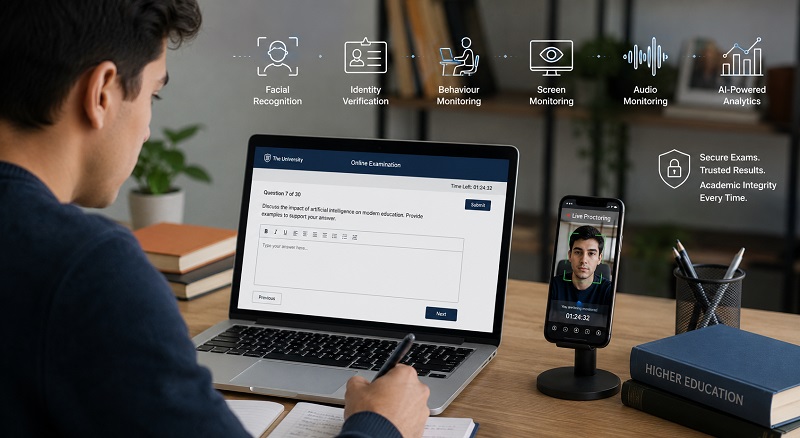
As South Africa continues to embrace digital transformation in education, the need for reliable exam integrity tools has become increasingly clear. With the rapid rise of online learning platforms and remote assessments, maintaining the credibility of academic qualifications is more important than ever. Exam integrity tools, including proctoring software, are no longer optional additions but essential components of a sustainable and trustworthy education system.
In this article, we explore the pivotal role of exam integrity tools in supporting digital education growth in South Africa. From preventing academic dishonesty to streamlining assessment management, we examine the features, benefits, and future of these technologies.
The Rise of Digital Education in South Africa
Over the past few years, digital education in South Africa has grown significantly. Institutions have moved beyond traditional classrooms, offering remote and hybrid learning options to make education more accessible to students across the country. Factors driving this shift include:
- Increasing internet access in urban and semi-urban areas
- The demand for flexible learning environments
- A growing need to upskill the workforce through online short courses and certifications
However, this growth brings with it a significant challenge — ensuring that online assessments are secure and credible. This is where exam integrity tools play a vital role.
What Are Exam Integrity Tools?
Exam integrity tools are digital technologies designed to uphold fairness and honesty during online assessments. These tools often include features such as:
- Identity verification through facial recognition or biometrics
- AI-based proctoring via webcams and microphones
- Screen monitoring to detect unauthorised browser activity
- Plagiarism detection software
- Secure browsing environments and lockdown browsers
By integrating these tools into digital learning systems, institutions can prevent cheating, protect academic standards, and maintain the value of their qualifications.
Why Exam Integrity Matters
Academic integrity is the foundation of any education system. Without it, learners lose trust in their institutions, employers question the credibility of qualifications, and the entire academic structure becomes compromised.
In South Africa, the credibility of qualifications is critical not only for individual careers but also for broader economic development. As more institutions go digital, the ability to demonstrate integrity in assessment practices becomes a key differentiator.
Benefits of Proctoring Software
Proctoring software is one of the most common types of exam integrity tools used in digital education. These solutions allow institutions to supervise online exams in real time or review recordings of student behaviour afterwards. The benefits include:
- Scalability: Proctoring software can monitor thousands of students simultaneously, which is especially useful for large universities and colleges.
- Cost Efficiency: Reduces the need for physical invigilators and travel expenses for students.
- Flexibility: Enables assessments from anywhere, making learning accessible to remote students.
- Fairness: Reduces the opportunity for dishonesty, creating a level playing field for all students.
Addressing Common Concerns About Online Proctoring
Despite the advantages, students and institutions often express concerns about proctoring tools. These include issues around privacy, accessibility, and technical reliability. Addressing these concerns is vital:
- Privacy: Responsible proctoring software should follow POPIA compliance and ensure all data is encrypted and securely stored.
- Accessibility: Tools should be compatible with low-data devices and function well in environments with unstable internet connectivity.
- Technical Support: Institutions should provide real-time support during assessments to resolve any issues students may face.
The Invigilator App is a South African example that addresses these concerns effectively by offering a mobile-friendly, data-light proctoring tool that prioritises student accessibility.
Integration with Learning Management Systems
For exam integrity tools to function seamlessly, integration with Learning Management Systems (LMS) is crucial. This integration allows for:
- Automatic scheduling of assessments
- Secure authentication via the student portal
- Instant grading and feedback systems
- Streamlined academic records management
By embedding proctoring tools into existing LMS platforms, educational institutions can enhance operational efficiency while upholding integrity.
The Role of AI in Modern Proctoring
Artificial Intelligence (AI) has revolutionised proctoring software by making monitoring more efficient and less intrusive. AI algorithms can now detect unusual behaviours such as:
- Frequent head movement
- Unauthorised background noise
- Switching tabs or browser windows
- Multiple people in the camera frame
These alerts can then be flagged for human review, balancing automation with human oversight.
Case Study: The Invigilator App in Practice
Developed in South Africa, The Invigilator App is a leading example of exam integrity tools in action. It was built with the South African context in mind, limited data access, varying devices, and affordability concerns.
Key features include:
- Facial recognition and GPS location verification
- Audio and video recording during exams
- Integration with most South African tertiary education platforms
- Offline mode with secure upload capabilities when back online
Thousands of students across South Africa have successfully used this app for assessments, demonstrating that secure digital exams are achievable on a large scale.
Strengthening Trust with Employers and Accrediting Bodies
Another advantage of using exam integrity tools is the assurance it provides to external stakeholders. Employers, accrediting agencies, and regulatory bodies need confidence that online degrees and certificates reflect genuine achievement. Demonstrating that students were fairly assessed under secure conditions reinforces the credibility of an institution’s qualifications.
The Future of Exam Integrity in South Africa
Looking ahead, the use of exam integrity tools will become even more critical as:
- Remote and hybrid education becomes standard practice
- International collaborations increase
- Student numbers continue to grow
Institutions that embrace proctoring software and robust academic honesty policies now will be better positioned to lead in the digital education landscape.
Digital education in South Africa is growing at a rapid pace, and with it comes the responsibility to uphold the highest standards of academic integrity. Exam integrity tools and proctoring software are essential in building trust, maintaining fairness, and ensuring the long-term success of online education. By embracing these tools now, institutions can secure their place in the future of global education.
Ready to strengthen your academic integrity practices with a trusted proctoring solution? Visit The Invigilator App Contact Page to learn how your institution can benefit.
FAQs and Answers
1. What are exam integrity tools?
Exam integrity tools are digital solutions that help prevent cheating during online exams by verifying identity, monitoring activity, and protecting content.
2. Why are proctoring tools important in South Africa?
Proctoring tools are crucial for ensuring that online assessments remain fair and credible, especially in the context of growing digital education in South Africa.
3. Is The Invigilator App suitable for low-data users?
Yes, it is designed to work with entry-level smartphones and minimal data usage, making it accessible to a wide range of South African students.
4. Can these tools integrate with learning platforms?
Most exam integrity tools, including The Invigilator App, integrate easily with popular Learning Management Systems used by institutions.
5. Do these tools protect student privacy?
Yes, responsible proctoring solutions follow strict data protection laws like POPIA and use encryption to safeguard personal information.
6. What happens if there is a technical issue during an exam?
Institutions usually offer real-time support and allow for backup procedures such as offline submissions or reattempts.
7. How does AI help in proctoring exams?
AI analyses behavioural patterns and flags unusual activity for further review, reducing manual monitoring and improving accuracy.
8. Are employers more likely to trust online degrees with proctoring?
Yes, proctored online assessments build employer confidence by ensuring qualifications reflect genuine effort and learning.