Introduction: The Urgent Need for Digital Exam Security
As education continues to evolve in South Africa, colleges face increasing pressure to modernise their examination processes. Traditional paper-based exams are giving way to online assessments, yet the challenge remains to ensure exam integrity in a digital-first environment. The demand to digitise exam security has never been greater.
Online proctoring tools now provide scalable, secure, and data-conscious alternatives that can uphold academic standards without physical invigilators. This article explores why and how South African colleges should digitise exam security in 2025, the benefits of doing so, and what tools and practices can support this transition.
Why Exam Security Matters in the Digital Age
With the rise of online learning and remote education, especially since the pandemic, institutions can no longer rely solely on physical invigilation. Exams that are not properly monitored can lead to widespread cheating, identity fraud, and loss of accreditation credibility. For South African colleges seeking to compete globally, maintaining the integrity of examinations is essential.
Digitising exam security ensures:
- Trust in qualifications issued by the college
- Fairness for all students across different locations
- Compliance with educational standards and regulations
- Efficiency in administration, review, and grading
What Does It Mean to Digitise Exam Security?
To digitise exam security means implementing technological systems that verify student identity, prevent cheating, and ensure secure data handling during online assessments. It involves replacing or enhancing human supervision with automated monitoring tools powered by artificial intelligence and other technologies.
Key Elements of Digital Exam Security
1. Online Proctoring Platforms
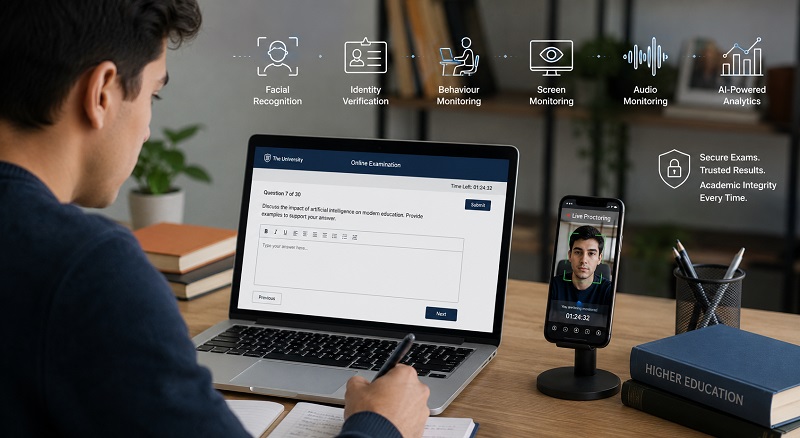
Online proctoring solutions like The Invigilator App allow colleges to monitor students remotely using AI-powered tools. These platforms typically include:
- Facial recognition for identity verification
- Audio and video monitoring to detect suspicious behaviour
- Screen recording or lockdown browsers to block access to unauthorised materials
- Location tracking to prevent proxy exam-taking
2. Secure Login and Authentication
Multi-factor authentication (MFA) and biometric scans ensure that only the registered student can access the assessment. Facial and voice recognition tools play a major role in reducing identity fraud.
3. Encrypted Data Storage
Colleges must comply with data privacy laws such as POPIA in South Africa. Secure exam platforms store all recordings, submissions, and student information using end-to-end encryption.
4. Automated Cheating Detection
AI can flag behaviour such as repeated glances off-screen, multiple voices in the room, or accessing blacklisted websites during the exam. These flags are then reviewed by human invigilators.
5. Offline Exam Support
In areas with limited connectivity, tools like The Invigilator App allow students to download assessments, complete them offline, and sync data when the connection resumes.
Benefits for South African Colleges
Wider Access to Education
With online exam systems, students in rural or underserved areas can take exams without travelling to a physical campus, helping to close the access gap.
Cost Savings
Digital exams reduce the need for physical space, printed papers, and human invigilators, translating into long-term savings for institutions.
Scalability
Colleges can conduct thousands of simultaneous exams with minimal manual intervention, scaling up without compromising on security.
Academic Integrity
Automated proctoring tools ensure that all students are monitored equally, and potential incidents are logged with time-stamped evidence.
How to Choose the Right Online Proctoring Tool
South African colleges should consider the following when selecting a platform:
- Local compatibility with POPIA and bandwidth constraints
- Device flexibility, including smartphone support
- Offline access, especially in low-connectivity areas
- Support and training available for educators and IT teams
- Pricing aligned with institutional budgets
One of the most suitable tools in the region is The Invigilator App, known for its data-light, mobile-first design and robust proctoring features tailored to the African education landscape.
Implementation Roadmap for Digitising Exam Security
- Audit Current Exam Processes
Evaluate gaps in current exam procedures and identify points of vulnerability. - Select a Suitable Platform
Choose a digital proctoring tool that meets institutional needs and student access realities. - Train Staff and Students
Provide training on how to use the system effectively and ethically. - Conduct Pilot Assessments
Trial the system with low-stakes tests before full-scale implementation. - Review Data and Optimise
Use platform analytics to refine assessment methods and address any flagged issues.
Preparing for 2025: Future-Proofing South African Colleges
The digital education landscape in South Africa is expected to grow exponentially in the next two years. Institutions that fail to adapt may struggle to attract students or gain accreditation.
Investing in online proctoring tools and exam digitisation is not just a short-term fix but a forward-looking strategy. As more students prefer remote learning options, colleges must align their systems with these expectations.
South African colleges stand at a pivotal moment. As 2025 approaches, institutions must modernise their examination processes to meet the evolving needs of students and regulators. Digitising exam security with smart tools like The Invigilator App ensures that assessments remain fair, secure, and accessible.
Whether your college is urban or rural, large or small, the move towards secure digital assessments is no longer optional. It is essential for quality, credibility, and the future of education in South Africa.
FAQs & Answers
1. What is digital exam security?
It refers to using technology like AI, biometrics, and encryption to ensure secure and fair online assessments.
2. Why should South African colleges digitise exam security?
To prevent cheating, protect data, and provide fair, scalable assessments for all students, including those in rural areas.
3. How do online proctoring tools work?
They use webcams, microphones, and screen monitors to observe student behaviour during exams and flag suspicious actions.
4. Is The Invigilator App suitable for all institutions?
Yes, it is designed for South African colleges, works on mobile phones, and supports both online and offline use cases.
5. What are the benefits of online exam tools?
They save costs, improve accessibility, enhance security, and provide detailed analytics for educators.
6. Do these tools comply with data protection laws?
Yes, platforms like The Invigilator App are POPIA compliant and ensure secure data transmission and storage.
7. Can students cheat with online proctoring?
Advanced AI and monitoring significantly reduce opportunities for cheating and help identify dishonest behaviour.
8. How can a college start using online exam platforms?
By auditing their current process, choosing the right tool, training stakeholders, and gradually rolling out secure digital exams.